

A Timeless Green Living Room: How Architecture and Interiors Shape Spaces That Last
Luxury interior design is often misunderstood as a visual exercise about finishes, décor, or statement pieces. In reality, the most successful living spaces are shaped much earlier, at the intersection of architecture, interior planning, and human experience. This green living room is a study in restraint, proportion, and continuity where every element is intentional, and nothing exists in isolation.
At Neomen, we approach residential interiors as architectural systems rather than decorative layers. Our work across architecture, interior design, and execution is guided by an integrated set of services that allow every project to evolve holistically. This project reflects that philosophy clearly: a living room designed not to impress instantly, but to feel composed, settled, and enduring over time.
Why Green Works in Luxury Living Room Design
Green has long been associated with calm, balance, and nature. In luxury living room interiors, especially within Indian homes, green performs a unique role it offers depth without heaviness and warmth without excess. Unlike trend-driven colors that date quickly, deeper green tones age gracefully and adapt well to changing furnishings and light conditions.
In this living room, the chosen shade of green is neither bright nor dramatic. It sits in a muted, heritage-inspired spectrum, allowing it to function as a backdrop rather than a focal point. This ensures the room remains timeless rather than tied to a specific design trend.
From an architectural standpoint, green works exceptionally well with classic detailing such as wall paneling, arches, and mouldings elements that rely on shadow and depth to create visual interest.
Wall Paneling as an Architectural Element
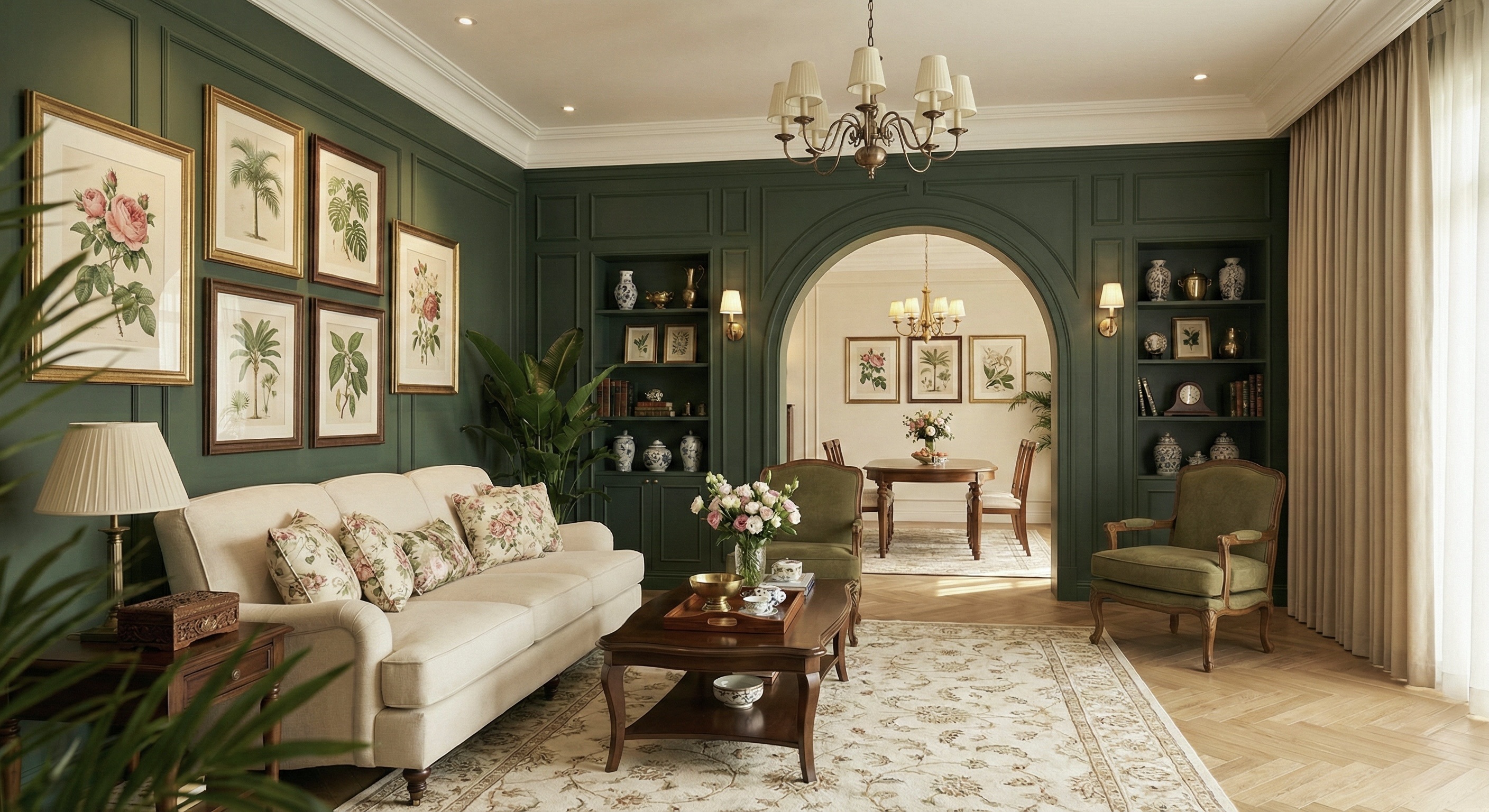
One of the defining features of this space is the use of green paneled walls. Paneling here is not applied as surface decoration; it is treated as an architectural framework that establishes rhythm and proportion across the room.
The panel sizes were carefully studied to align with furniture scale, ceiling height, and lighting placement. This avoids the common mistake of decorative paneling that feels either too dense or too sparse. When paneling proportions are resolved correctly, the walls stop feeling flat and begin to hold the space together.
For luxury interior design in Noida and Delhi NCR, this approach is particularly relevant. Homes often feature large floor areas, and without architectural articulation, these spaces can feel visually hollow. Paneling introduces order and structure without overwhelming the room.
Botanical Art: Softening Without Noise
Artwork selection plays a crucial role in defining the character of a living room. In this space, botanical prints were chosen deliberately to complement the green palette while introducing a layer of softness.
Rather than oversized statement art, a curated gallery of botanical illustrations creates visual rhythm and balance. The subject matter reinforces the natural undertone of the green walls, while the restrained framing prevents visual clutter.
Importantly, the artwork aligns with the panel layout rather than fighting it. This alignment is subtle, but it is what separates architect-designed interiors from styled interiors. The walls read as a cohesive system, not a collage of elements.
The Role of Arches in Spatial Flow
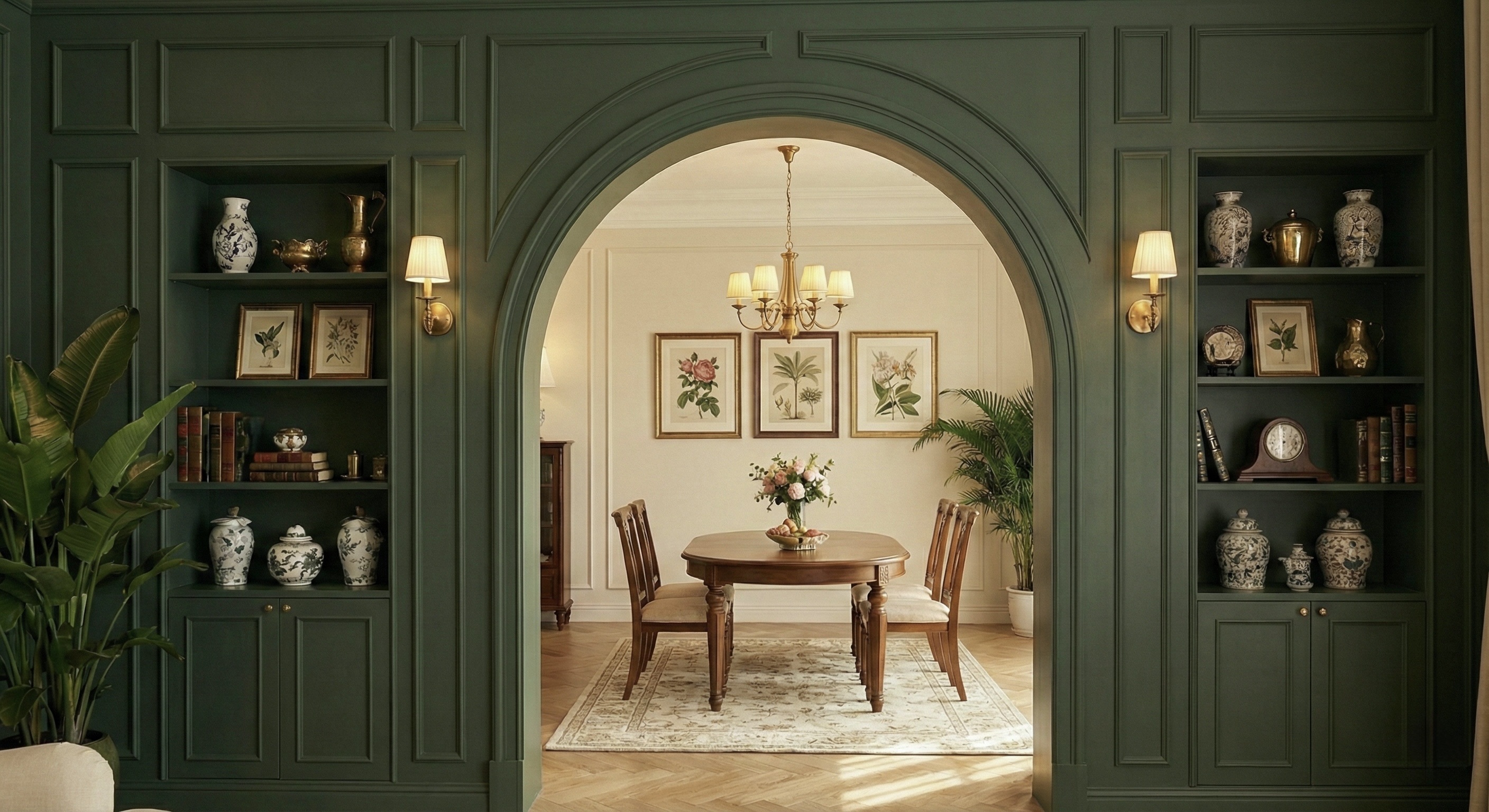
The arched opening between the living and dining areas is not a decorative flourish it is an architectural decision rooted in movement and transition. Arches soften spatial boundaries while maintaining a sense of separation between functions.
In modern luxury homes, open-plan layouts are common, but they often lack hierarchy. The result is a continuous space with no sense of pause. Introducing an arch creates a moment of transition, allowing each area to retain its identity without feeling disconnected.
From an architectural design perspective, this is where planning matters most. The arch is proportioned to align with ceiling height, wall paneling, and furniture placement, ensuring it feels integrated rather than imposed.
Lighting as a Structural Tool
Lighting in this living room was planned alongside architecture, not added afterward. This distinction is critical.
Wall sconces are positioned to enhance panel depth and highlight moulding details. Warm ambient lighting complements the green tones, preventing the space from feeling heavy or closed-in. Natural daylight is allowed to interact with surfaces, changing the mood of the room throughout the day.
In many residential interiors, lighting becomes an afterthought leading to glare, uneven illumination, or excessive fixtures. Here, lighting is used sparingly but purposefully, reinforcing the calm character of the space.
Furniture Scale and Placement
Luxury interiors are often compromised by furniture that does not relate to the architecture around it. In this project, furniture selection was guided by scale rather than trend.
The sofa profile is low and balanced, ensuring it does not compete with wall paneling or artwork. Coffee table styling is minimal, reinforcing the idea that luxury is about clarity rather than abundance.
Each furniture piece respects circulation paths and sightlines, maintaining openness while preserving intimacy. This is especially important in living rooms that serve both formal and informal functions.
Material Palette and Longevity
A restrained material palette anchors this living room firmly in timeless design. Warm wood flooring introduces texture and comfort, while brass accents add quiet refinement without becoming dominant.
Material choices were evaluated not just for appearance, but for how they would age. Finishes that patina gracefully were prioritized over high-gloss or high-maintenance surfaces. This ensures the space remains elegant years after completion.
For homeowners seeking luxury interior design in Delhi NCR, this approach delivers long-term value both visually and functionally.
Architecture and Interiors as One System
What sets this living room apart is not any single element, but the way all elements work together. Architecture, interiors, lighting, furniture, and artwork were planned as a single cohesive system from the beginning.
This integrated approach is a core part of Neomen’s Design & Build process, delivered through our services, where planning and execution are aligned from concept to completion. It eliminates common design issues such as misaligned proportions, awkward lighting placement, or decorative overload.
Designing for Indian Homes, Thoughtfully
Indian homes come with unique challenges varying light conditions, extended family usage, and diverse lifestyle needs. Luxury interior design must respond to these realities rather than replicate international trends blindly.
This living room demonstrates how classic European-inspired elements can be adapted thoughtfully within an Indian context. The result is a space that feels globally informed yet locally grounded.
Why Timeless Design Matters
Trends change quickly, but homes are lived in for decades. Timeless interiors reduce the need for frequent renovations and allow homeowners to evolve their spaces gradually rather than dramatically.
A living room designed with proportion, material integrity, and architectural clarity remains relevant even as furnishings or accessories change over time. This adaptability is the true mark of luxury.
The Neomen Approach
Neomen is an architectural and interior design firm based in Noida, working across Gurugram and Delhi NCR. Our portfolio of residential work, visible across our gallery of projects, reflects a consistent focus on clarity, restraint, and long-term livability.
Our practice focuses on architecture, interior design, and turnkey design-build services for premium residences. Rather than designing for visual impact alone, we design homes that feel balanced, functional, and enduring.
This green living room reflects that philosophy a space shaped by clarity, not excess.
Final Thoughts
Luxury does not need to announce itself. The most successful living rooms are those that feel calm, intentional, and complete. When architecture and interiors are aligned, spaces gain a quiet confidence that does not rely on trends or ornamentation.
This project stands as an example of how thoughtful design decisions made early and executed carefully can result in a living room that feels timeless from the moment it is completed.
For further insight into how subtle architectural moments shape entire homes, read Can one quiet corner carry the weight of a full home’s story.