

Many homes appear visually appealing during the day but lose their character after sunset. This usually happens because lighting is treated as a decorative add-on rather than a fundamental architectural tool. Spotlights are added late, fixtures are overused, and spaces end up feeling either flat or uncomfortably harsh.
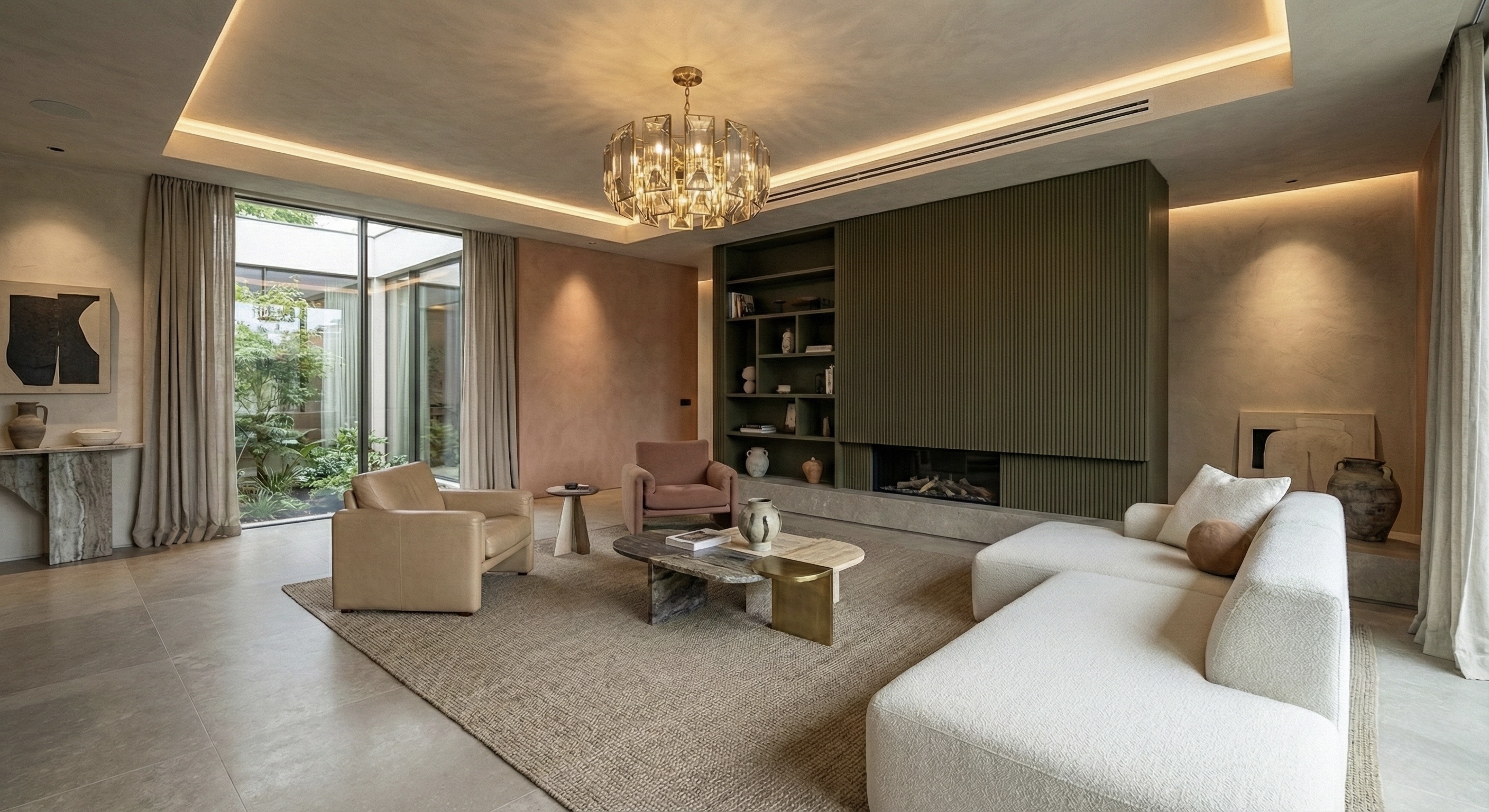
At Neomen Architects and Interior Designers, lighting is planned as part of the architectural design from the earliest stages. Ceiling depths are designed to accommodate concealed lighting. Wall surfaces are shaped to receive soft washes of light. Volumes are created intentionally so that shadow and glow can coexist naturally. This ensures lighting enhances the space rather than overpowering it.
Natural light is always studied first. Window positions, opening heights, and orientations are carefully planned so daylight moves through the interiors in a controlled and comfortable manner. This reduces glare, improves spatial comfort, and creates subtle variations throughout the day. Artificial lighting then takes over seamlessly in the evening, maintaining the same sense of balance and calm.
Layered lighting plays a critical role in this approach:
-
Cove lighting defines architectural volume
-
Wall washers reveal texture and depth
-
Focused accents add hierarchy without visual clutter
Decorative fixtures, where used, remain secondary. The architecture itself carries the experience.
This method solves a common residential problem—homes that feel bright but lifeless, or dramatic but uncomfortable. When lighting is architectural, spaces remain calm, immersive, and timeless at all hours.
Luxury is not about brightness.
Luxury is about how thoughtfully light shapes space.
This philosophy guides every project at Neomen Architects and Interior Designers, ensuring homes remain visually rich, comfortable, and relevant long after trends fade.
Also Read - How to choose the right architect