

Many homes look complete only on the surface. Over time, however, they begin to feel uncomfortable, inefficient, or visually disconnected. This often happens when architecture and interior design are treated as separate layers rather than one cohesive system.
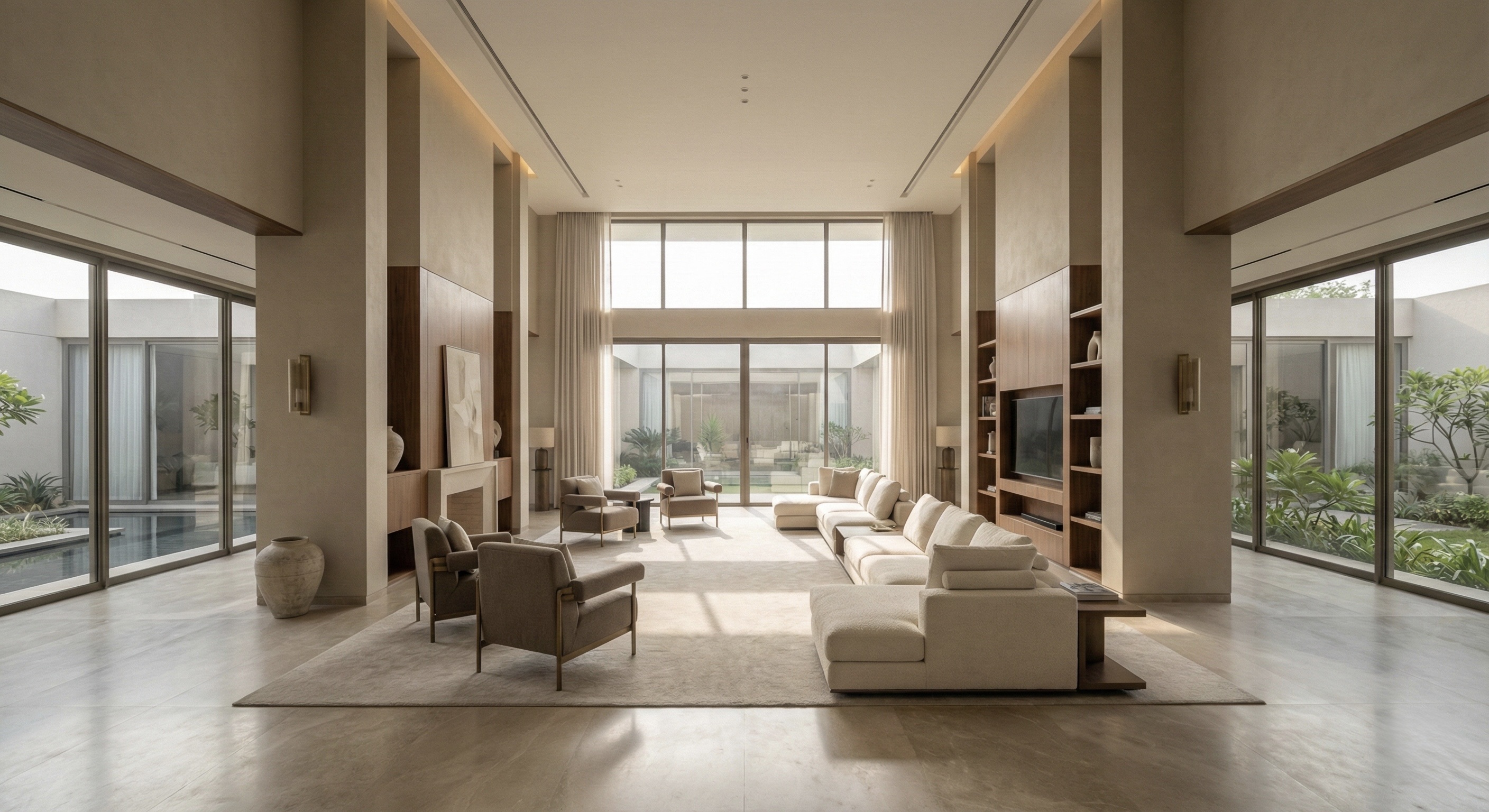
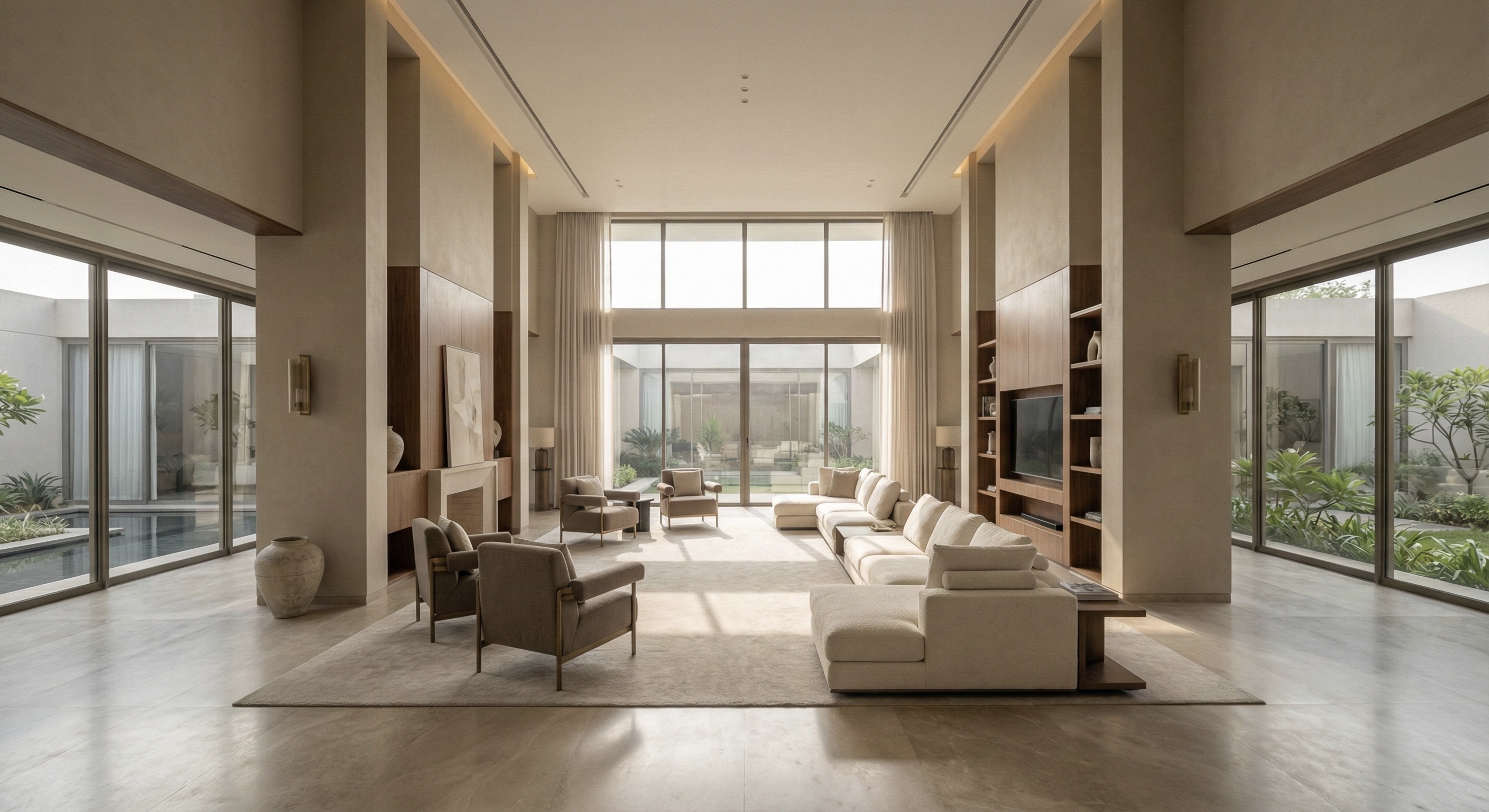
In this residence, architecture and interiors were planned together from the earliest design stage. Ceiling heights were determined in relation to furniture proportions and human scale. Window placements were studied not just for elevation aesthetics, but for how daylight would move through the interiors across different times of the day. Structural walls were positioned to support circulation, seating layouts, and visual balance.
The material palette remains calm and restrained to allow space, light, and proportion to take precedence. Neutral tones, soft stone surfaces, and warm wood accents create continuity without visual noise. Instead of relying on decorative elements, the design focuses on clarity, rhythm, and comfort.
Lighting is embedded into the architecture rather than added later. Concealed coves and subtle wall lighting enhance depth while maintaining a quiet atmosphere. The result is a home that feels intuitive, timeless, and effortless to live in.
This approach ensures that interiors do not fight the architecture, and architecture does not overpower daily living. When both are designed as one, spaces remain relevant, balanced, and deeply comfortable over time.